Here's the paradox that catches almost every first-time visitor to the Vatican: St. Peter's Basilica is free to enter, yet it can cost you more time than any paid attraction in Rome. The basilica itself charges nothing at the door — but the security line snaking across St. Peter's Square can swallow an hour or more of your day in peak season. So the real question isn't "how much does it cost," it's "how do I avoid the wait?" This guide walks through exactly that, plus what to do once you're inside and how the dome climb works.
Free to enter, but the line is the price
Let's be clear up front, because it confuses people: entering St. Peter's Basilica is free. There's no admission ticket for the church. What you're waiting in is the security screening — the same metal-detector check you'd find at any major monument — and in high season that queue across the square can run well over an hour.
That single fact reframes the whole visit. You're not paying with money; you're paying with time, and time is the thing a short Rome trip can least afford. Everything below is about minimizing that cost.
How to skip (most of) the wait
There's no way to skip the security check entirely — everyone goes through it — but there are reliable ways to shorten the wait dramatically.
Go early. The single most effective move. Arrive at opening, before the tour groups and the mid-morning surge. The square is calmer, the light is beautiful, and the line is a fraction of what it becomes by late morning.
Go late afternoon. The other quiet window. Many day-trippers have moved on, and the basilica stays open into the evening for much of the year — check the current hours, which shift seasonally.
Come via the Vatican Museums. This is the insider route most first-timers don't know about: some guided museum tours exit directly into St. Peter's through an internal passage, bypassing the main square security line entirely. If you're already doing the Vatican Museums and Sistine Chapel, a tour that includes basilica access via this passage is the most efficient way to see both in one morning. Note this connection is generally available only on guided tours, not to independent museum visitors.
Avoid Sundays and Wednesday mornings. Sunday brings the Angelus and far bigger crowds; Wednesday mornings often have the Papal Audience in the square, which can delay access and packs the area — the basilica may open later or you may wait until the audience ends. Plan around them.
The dress code is enforced — really
This is where well-prepared Americans still get turned away at the door. St. Peter's enforces a strict dress code, and the staff do not make exceptions: shoulders and knees must be covered, for men and women alike. No tank tops, no shorts, no short skirts, no bare shoulders. In Rome's summer heat this is genuinely easy to forget when you're dressing for 33°C/91°F — so the simple fix is to carry a light scarf or wrap you can throw over your shoulders, and choose longer shorts or trousers. Get turned away and you'll lose your place in a line you just waited in.
What to see inside
St. Peter's is vast — the largest church in the world — and it rewards knowing what to look for rather than drifting:
- Michelangelo's Pietà, just inside to the right, sculpted when he was in his twenties. It's behind protective glass; arrive early to see it without a scrum.
- Bernini's baldachin, the towering bronze canopy over the papal altar, directly beneath the dome.
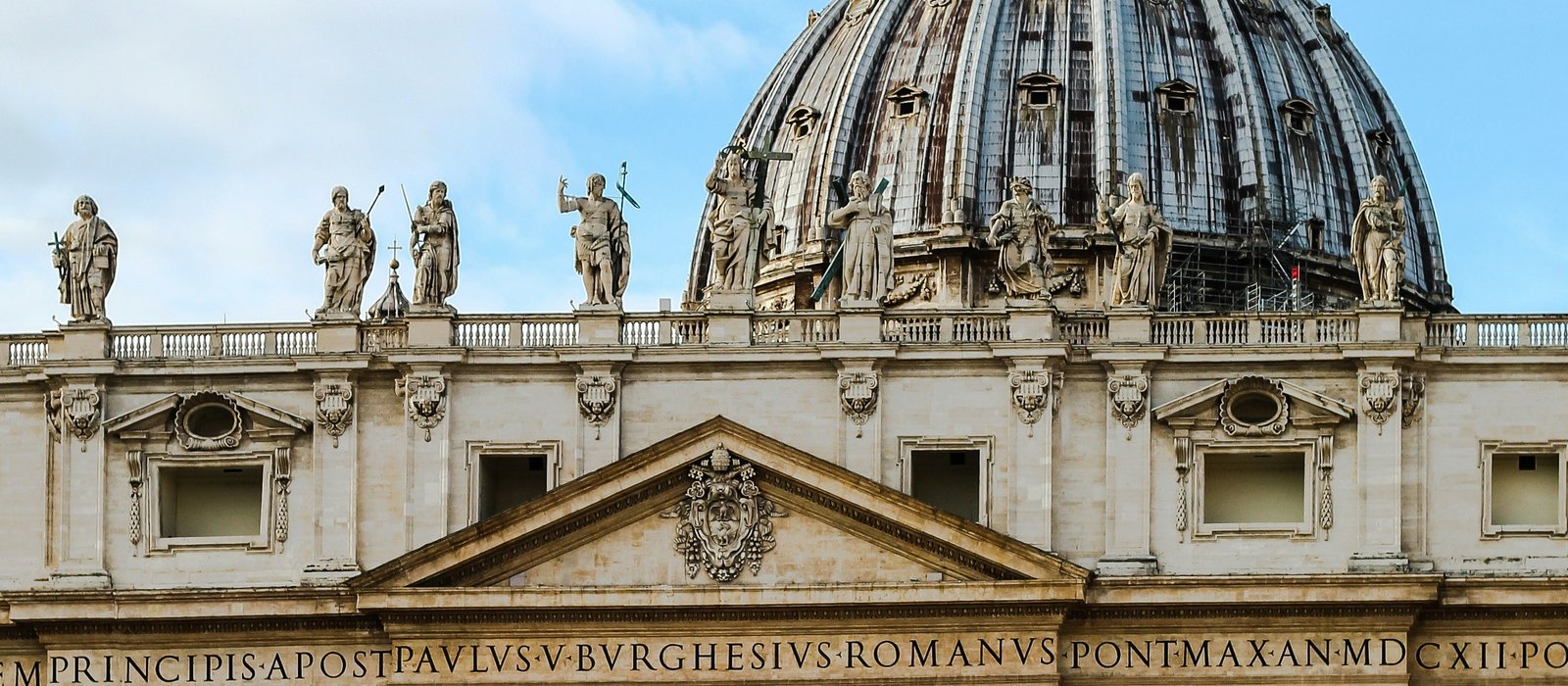
- The dome itself from the inside — the scale only really lands when you stand under it and look up.
- The sheer dimensions: markers in the floor show how other great cathedrals would fit inside.
Give yourself at least 45 minutes to an hour inside, more if you want to absorb it rather than tick it off.