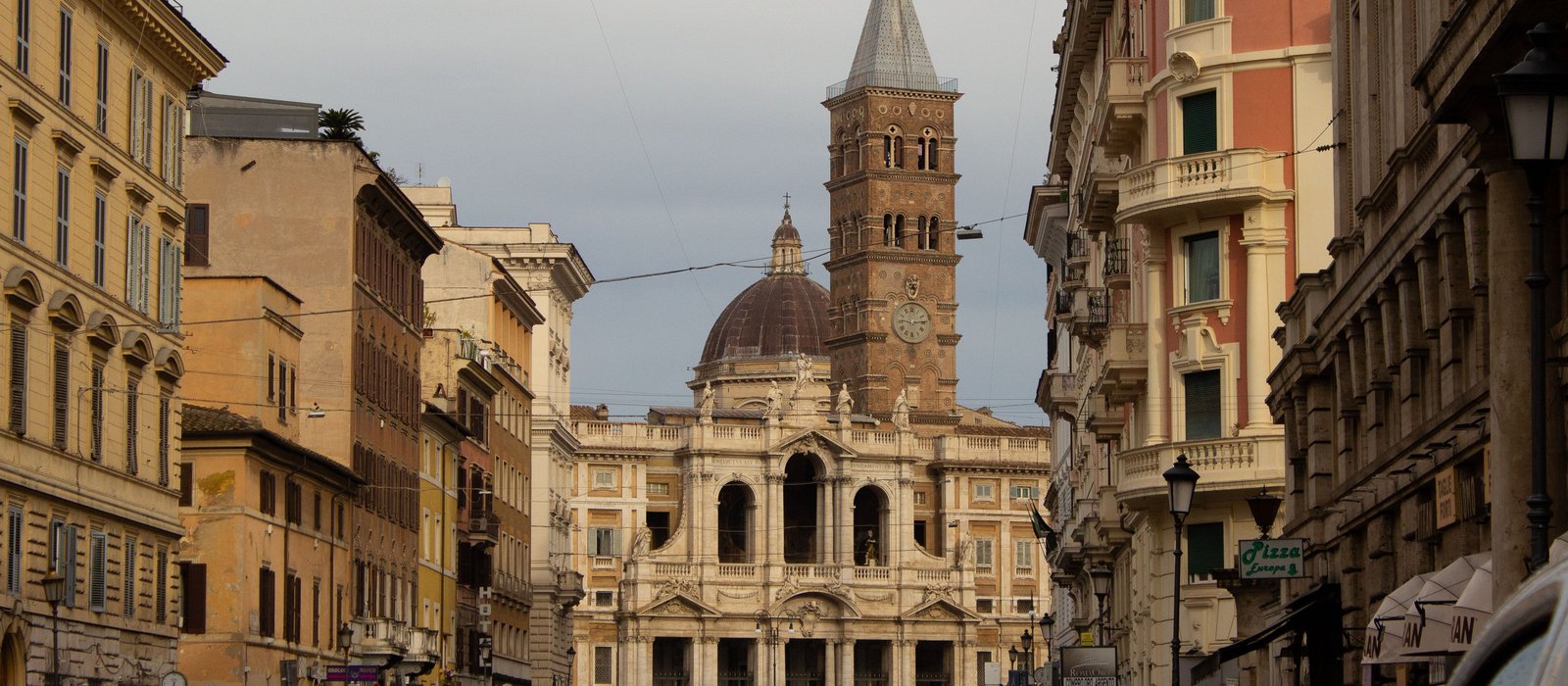
The area around Termini station and the Esquilino hill is where most visitors arrive in Rome — and where many never linger, dismissing it as the gritty transport district. That's half right: it is functional and rough around the edges in spots. But Esquilino also hides some of Rome's genuine treasures (a major basilica, extraordinary ancient art, the city's best multicultural market) that reward the curious. This honest guide cuts through it — what's actually worth your time here, what to skip, and how to make sense of a neighborhood most guidebooks rush past.
The honest lay of the land
Esquilino is one of Rome's seven hills, sprawling around and south of Termini, the main rail station. The area is a mix: grand 19th-century architecture, a major basilica, world-class museums — alongside the busy, impersonal, sometimes scruffy streets of a transport hub and Rome's most multicultural, working quarter. It's not picture-postcard Rome, and the immediate Termini surroundings are the least charming part of the center (gritty, worth normal pickpocket awareness — see our safety guide). But pockets of it are genuinely worthwhile, and its diversity makes it one of the most real, un-touristy parts of central Rome.
What's genuinely worth your time
Santa Maria Maggiore (don't miss)
One of Rome's four great papal basilicas and a stunning one — glittering 5th-century mosaics, a coffered gold ceiling (said to use the first gold brought from the Americas), and major significance. It's free, magnificent, and the single best reason to come to Esquilino. An essential Rome sight that happens to be here.
Palazzo Massimo alle Terme (a hidden gem)
Part of the National Roman Museum, and one of Rome's most underrated museums. Its treasures: breathtaking ancient Roman frescoes and mosaics, including the garden frescoes from Livia's villa and some of the finest Roman wall paintings anywhere, plus superb classical sculpture. Crowd-free and extraordinary — a favorite of those in the know, steps from Termini.
The Baths of Diocletian
Rome's largest ancient baths complex, parts of which now house museum collections — and Michelangelo converted a section into the church of Santa Maria degli Angeli. Ancient grandeur, often quiet.
Nuovo Mercato Esquilino (the multicultural market)
Rome's most international market — a covered hall near Piazza Vittorio where the city's immigrant communities shop, full of global ingredients (South Asian, African, Middle Eastern, Chinese) alongside Italian produce, often at the lowest prices in the city. A vivid, un-touristy slice of modern multicultural Rome and a great spot for hard-to-find ingredients (see our markets guide).
Piazza Vittorio Emanuele II
The largest square in Rome, with a garden, faded grandeur, and the multicultural buzz of the neighborhood around it. Worth a wander to feel the area's real character.
What to skip or just pass through
- The immediate streets right around Termini — functional and charmless; fine to pass through, not worth lingering (and mind your bag).
- Don't come to Esquilino expecting cobbled-lane romance — that's elsewhere (Trastevere, Monti, the centro). Come for the specific gems above.