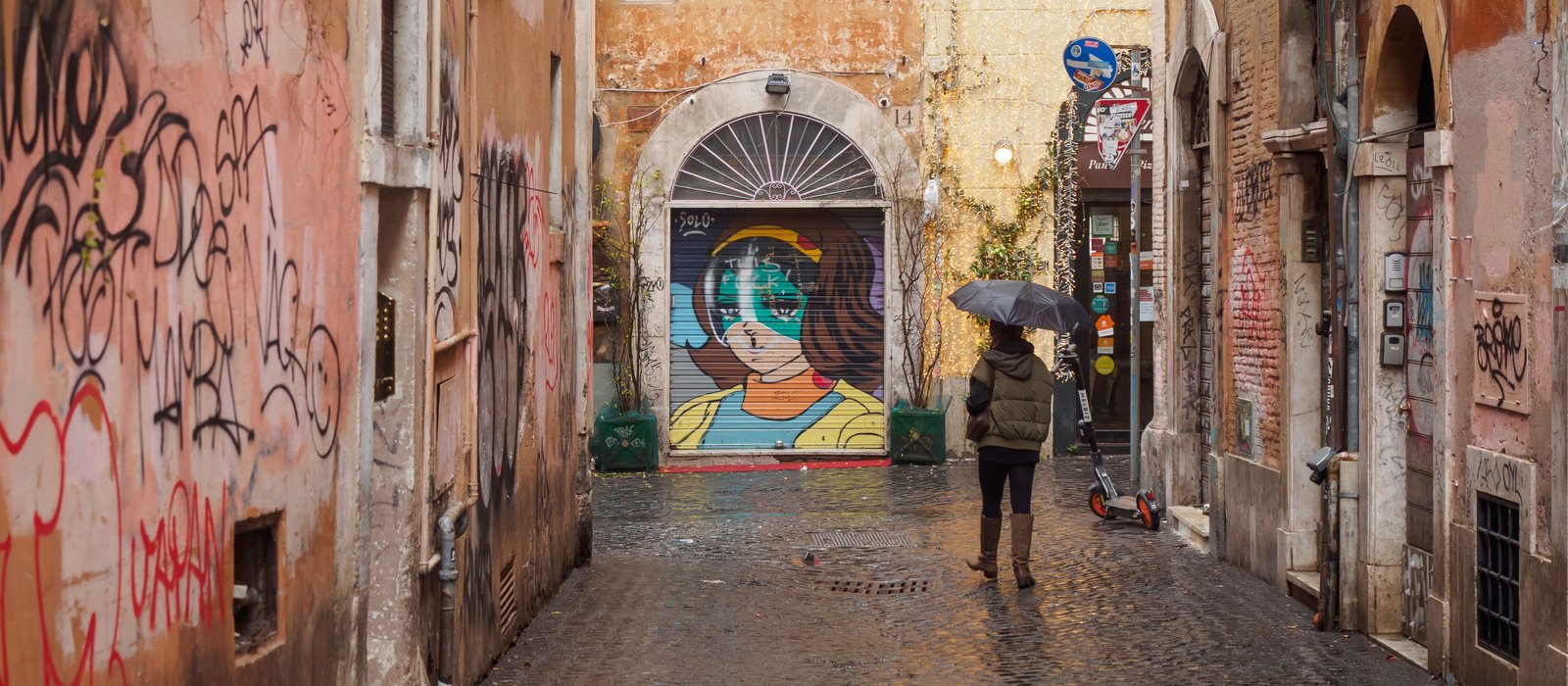
For travelers who've seen the ancient ruins and want a different, edgier side of Rome, head south to Ostiense — a former industrial district that's become the city's street-art capital and one of its coolest, most creative neighborhoods. Here, towering murals cover old factory walls, a converted power station houses ancient sculpture, hip bars fill repurposed warehouses, and the atmosphere is gritty, young, and refreshingly un-touristy. This guide covers Ostiense's spectacular street art, the unexpected sights, and how to explore a side of Rome most visitors never see.
What Ostiense is about
Ostiense is a post-industrial neighborhood south of the center (beyond Testaccio), built around old gasworks, factories, and warehouses. As the industry faded, artists and nightlife moved in, and today it's one of Rome's most vibrant, alternative quarters — a contrast to the ancient-and-baroque postcard Rome. Its calling card is world-class street art: huge, ambitious murals by internationally known artists cover the neighborhood's industrial facades, turning whole streets into an open-air gallery. Add converted-industrial museums, a buzzing bar and club scene, and a genuine local-creative energy, and Ostiense is the place to feel Rome's contemporary, edgy side.
The street art
Ostiense (along with the adjacent areas) is the heart of Rome's street-art movement, with large-scale murals from major Italian and international artists. What to know:
- The murals are large and ambitious — covering the sides of buildings, old factories, and warehouses, many several stories tall.
- Big names — works by celebrated street artists (Italian and international) have made the district a recognized street-art destination.
- It's an open-air, free gallery — just wander the streets (especially around Via del Porto Fluviale and the surrounding blocks) and look up; the art is all around.
- The famous Via del Porto Fluviale mural — one enormous, much-photographed work transforms an entire former military building into a row of giant faces, a neighborhood icon.
- It changes — street art is living and evolving; new works appear, and a wander always turns up something fresh.
A self-guided street-art wander (or a dedicated street-art tour) is the best way to take it in — phone camera ready, exploring block by block.
The other Ostiense sights
Beyond the murals, the neighborhood has genuine surprises:
Centrale Montemartini (a must for the unexpected)
One of Rome's most striking museums: a converted power station where ancient Roman marble statues are displayed against a backdrop of old industrial machinery — diesel engines and turbines beside classical gods. The juxtaposition of ancient art and industrial heritage is unforgettable, and it's wonderfully crowd-free — an offshoot of the Capitoline Museums. A genuine hidden gem.
The Ostiense atmosphere
- Converted-industrial nightlife — bars, clubs, and restaurants in repurposed warehouses and factories; one of Rome's best areas for an alternative night out.
- Eataly Roma — the huge food emporium near Ostiense station, if you want artisan Italian food and produce under one roof.
- The Pyramid of Cestius — an actual ancient Egyptian-style pyramid (a Roman tomb from ~12 BC) marking the edge of the area near Testaccio, beside the atmospheric Non-Catholic Cemetery (resting place of Keats and Shelley).
- The Gazometro — the iconic skeletal gasometer, a striking industrial landmark and symbol of the district.