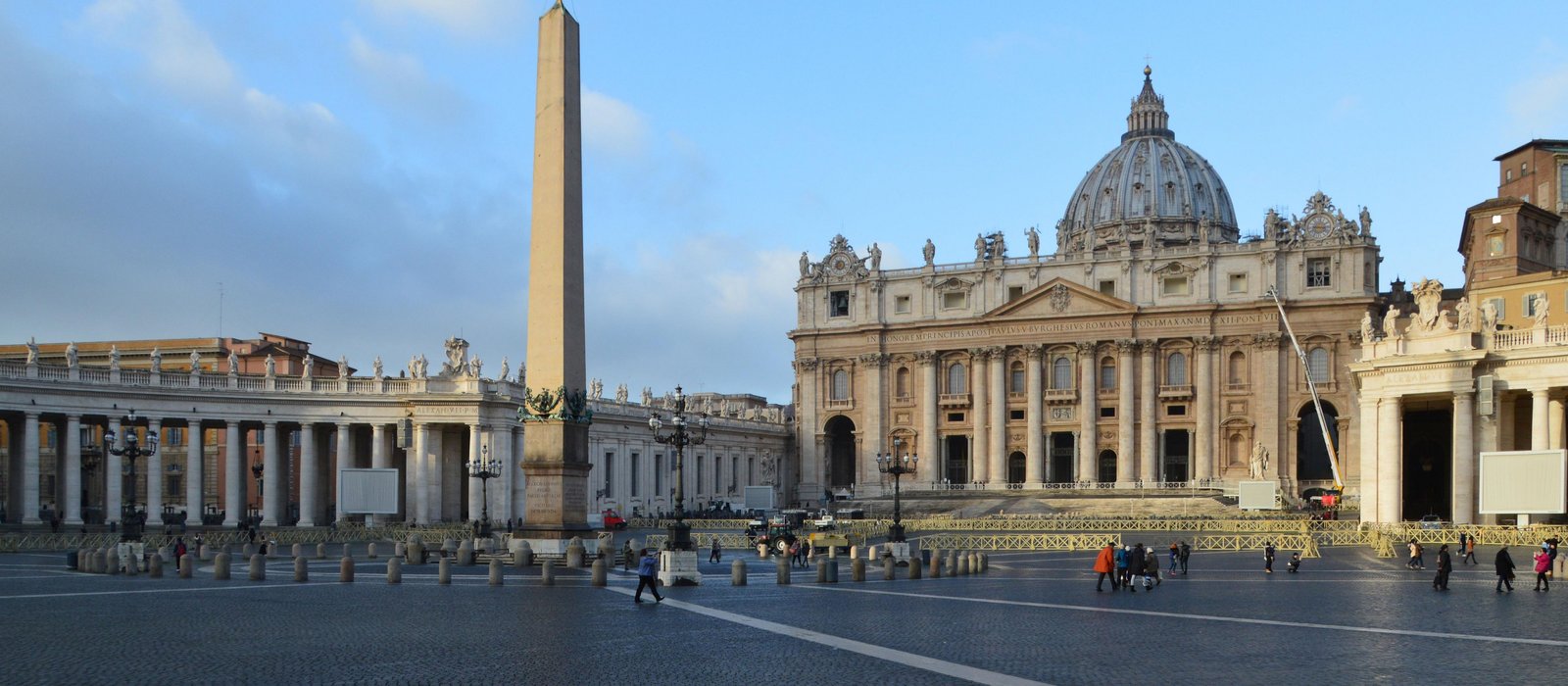
You've traveled all the way to Rome — why not also see the Pope? It's easier than most visitors realize, and it's free. Each week the Pope holds a General Audience open to the public, and on Sundays he appears to bless the crowd, no ticket required. For many travelers, regardless of faith, witnessing this in the vast sweep of St. Peter's Square is one of the most moving moments of a Rome trip. This guide explains how the Papal Audience works, how to get the free tickets, and what to expect — plus the ticket-free Sunday alternative.
The two ways to see the Pope
There are two distinct events, and the difference matters:
The Wednesday General Audience (ticket required, but free)
The main event is the General Audience, held (nearly) every Wednesday when the Pope is in Rome, usually starting around 9–10 a.m. It's normally in St. Peter's Square (which holds tens of thousands), or, in bad weather or cold months, in the indoor Paul VI Audience Hall (which holds far fewer, making tickets tighter). The Pope tours through the crowd, gives an address and a short teaching in several languages, and ends with a blessing. Free tickets are required (details below).
The Sunday Angelus (no ticket needed)
Every Sunday at noon, the Pope appears at the window of the Apostolic Palace overlooking St. Peter's Square to deliver a short message and lead the Angelus prayer, followed by a blessing. No ticket is needed — just show up in the square. It's briefer (around 15 minutes) and you won't be as close, but it's the easiest, most spontaneous way to see the Pope.
How to get free tickets to the Wednesday Audience
Tickets are genuinely free — never pay a reseller for the tickets themselves (you're only ever paying for an optional guided/escorted service, not the entry). The main ways:
- Request in advance through the Prefecture of the Papal Household (the official Vatican office). You submit a request (by the Vatican's stated method) ahead of time, then collect the tickets in Rome.
- Collect in Rome: tickets are typically picked up the afternoon before the audience, or early on the Wednesday morning itself, from the designated collection point near the Vatican.
- Plan ahead in busy periods — request a week or more in advance when crowds are high, as interest in the current Pope has been strong.
Confirm the current procedure on the official Vatican channels before your trip, as the request method and collection details can change.
What to expect on the day
- Arrive early for a good spot. Tickets grant access to a section, not a specific seat — seating is first-come, first-served, so the earlier you arrive (often a couple of hours ahead for a close spot), the better your view. Security screening applies.
- The Pope circulates through the square (often in the popemobile) before settling in to speak — this pass through the crowd is when you'll get closest.
- It's multilingual. The address and greetings are given in Italian and summarized in several languages including English; the final blessing extends to the crowd and to religious articles people bring (rosaries, etc.).
- It lasts roughly 1–1.5 hours; you may leave early, but stay to the end for the blessing.
- Dress respectfully — it's a religious event at a sacred site (shoulders and knees covered is wise, as elsewhere in the Vatican).