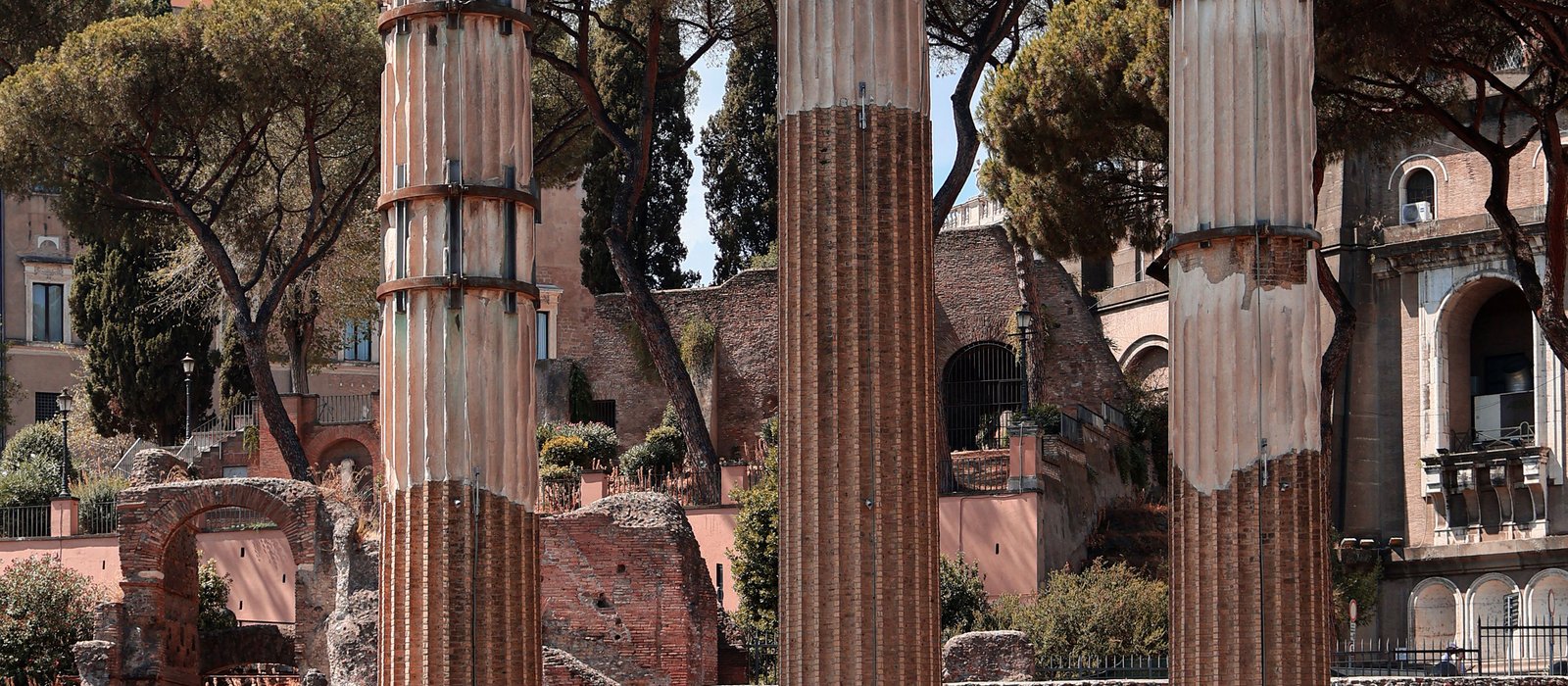
To an unprepared visitor, the Roman Forum can look like a confusing field of broken columns and rubble. To someone who knows what they're seeing, it's the single most evocative place in Rome — the literal center of the ancient world, where the Republic and Empire were governed, where Caesar was cremated, where triumphal processions ended. The difference between those two experiences is entirely a matter of context. This guide gives you that context: what the Forum was, the key things to find, and how to visit it so the stones come back to life.
What the Forum was
For roughly a thousand years, the Roman Forum (Forum Romanum) was the beating heart of Rome: its marketplace, its law courts, its political stage, and its religious center all at once. This low valley between the Capitoline and Palatine hills held the Senate house, the great temples, the speakers' platform from which Rome was governed, and the sacred road along which victorious generals paraded. When Romans said something happened "in the Forum," they meant it happened at the center of the world.
After Rome fell, the Forum was quarried for stone, buried under silt, and grazed by cattle (it was long known as the "Campo Vaccino," the cow field) until excavations from the 18th century onward uncovered what we see today. So you're looking at the surviving skeleton of a thousand years of monuments, layered on top of each other.
A beginner's mental map
If the names blur together, hold onto this simple frame and the Forum suddenly makes sense. Picture three functions overlapping in one valley: politics (the Senate House/Curia, the speakers' platform called the Rostra, and the open square where citizens gathered), religion (the temples — Saturn, Vesta with its eternal flame, the deified Caesar), and ceremony (the Via Sacra and the triumphal arches that processions passed through). Almost everything you see slots into one of those three. The big freestanding columns are temple remains; the arches are victory monuments; the brick box that looks oddly intact is the Senate House (it survived by becoming a church). You don't need to memorize emperors — just walk the Via Sacra spine and notice how temples line it and arches bookend it, and the layout of Roman public life reveals itself.
The key things to find
You don't need to identify everything — but knowing a handful of landmarks transforms the visit:
- The Via Sacra — the "Sacred Way," the main road running through the Forum, along which triumphal processions passed. Walking it is walking the ceremonial spine of ancient Rome.
- The Temple of Saturn — its eight surviving columns are among the Forum's most photographed sight; it once held the state treasury.
- The Arch of Septimius Severus — a triumphal arch at the Forum's northwest end, remarkably intact, celebrating a military victory.
- The Curia (Senate House) — astonishingly well-preserved (it survived by becoming a church), this brick building is where the Roman Senate actually met.
- The Temple of Vesta and the House of the Vestal Virgins — the round temple held Rome's sacred eternal flame, tended by the Vestals, whose residence's ruins and statues remain.
- The Temple of Caesar — built on the spot where Julius Caesar's body was cremated after his assassination; people still leave flowers there.
- The Arch of Titus — at the Palatine end, depicting the sack of Jerusalem; the model for triumphal arches ever since.