The Pantheon is, quietly, the most astonishing building in Rome — a nearly two-thousand-year-old temple so perfectly preserved you can walk in and stand under the same dome the ancient Romans did, lit by the same open hole in the ceiling. It's also changed in one big way recently: it now charges admission and runs on timed entry, which catches first-timers off guard. This guide covers what you're looking at, how the (new) ticketing works, when to go, and how to make the most of a visit that rarely takes more than half an hour but lingers far longer in memory.
Why the Pantheon is special
Most ancient Roman buildings survive as ruins; the Pantheon survives as a building. Completed under the emperor Hadrian around 126 AD (on the site of an earlier temple by Marcus Agrippa, whose name is still inscribed across the front), it owes its preservation to being continuously used — converted into a church in the 7th century, which it remains. That's why it stands essentially whole while the Forum lies in fragments.
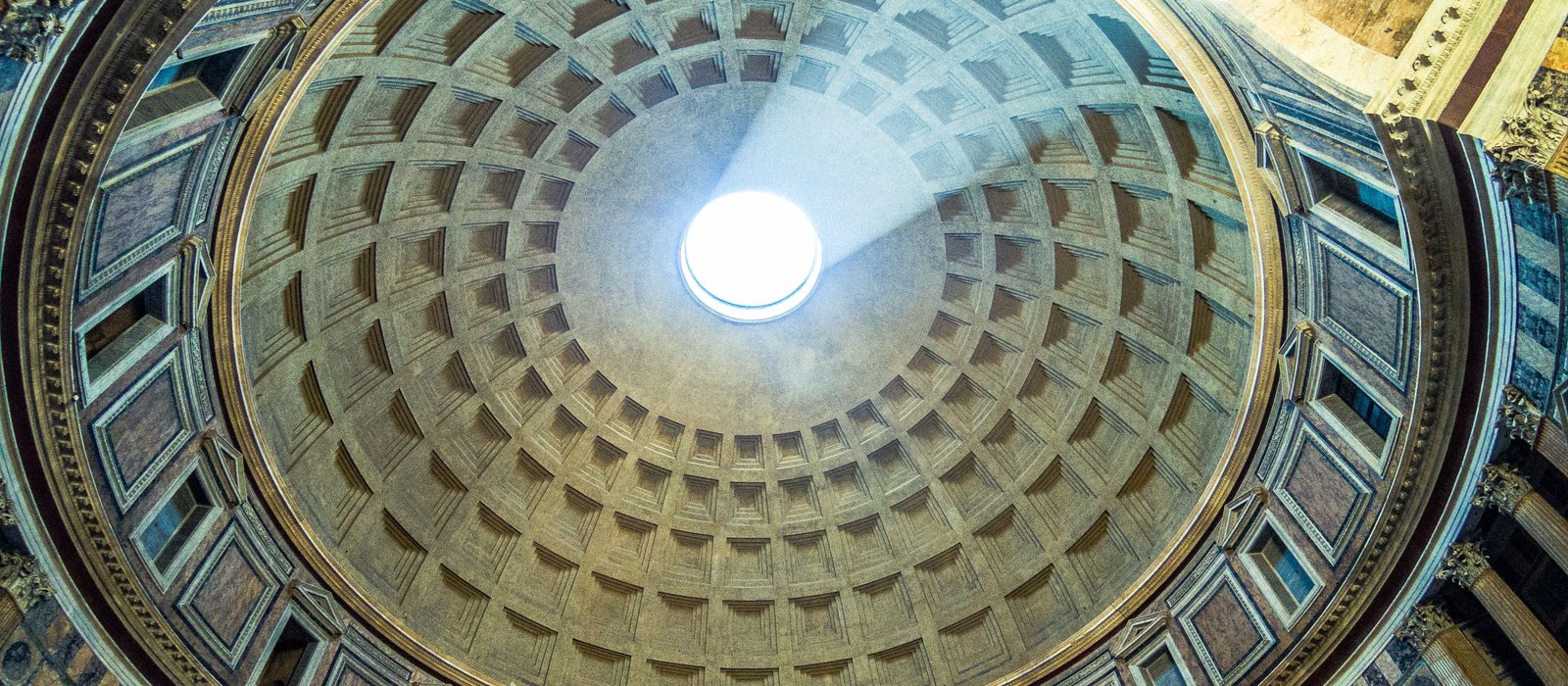
The headline is the dome: still the largest unreinforced concrete dome in the world, a perfect hemisphere whose height equals its diameter. At its center is the oculus, a 9-meter open hole to the sky — the building's only light source, and not covered, so rain genuinely falls through it (the floor is gently sloped and drained for exactly that). Standing beneath it as a shaft of sunlight moves across the coffered ceiling is one of Rome's great quiet moments. Inside, you'll also find the tomb of the artist Raphael and those of Italy's first kings.
The new ticketing: what changed
Here's the practical update every visitor needs. The Pantheon was free for years; it now has a paid, timed-entry admission. A few things to know:
- You book a time slot — it's genuinely timed entry, not just a pay-and-wander system, so reserving ahead is wise in busy periods.
- The price is modest but check the current rate when you book, as it's changed recently and may again.
- Reduced and free categories exist (younger visitors and certain others) — check current rules.
- As a working church, entry can be restricted during Mass and religious services, regardless of your ticket.
Because the specifics (price, exact booking process, any free days) shift, confirm the current rules on the official ticketing channel rather than relying on older advice — including the once-true "it's free."
A few things most visitors don't know
A handful of details that deepen the visit: - It was an engineering gamble that paid off for 2,000 years. Roman builders graded the concrete mix lighter toward the top of the dome (using lightweight volcanic pumice up high, denser material at the base) — one reason it still stands when nothing else of its scale does. - The bronze that once covered the portico ceiling is gone — famously stripped in the 17th century and, by tradition, partly reused elsewhere, which gave rise to a Roman saying about what "the barbarians didn't do, the Barberini did" (a dig at the pope of the era). - It's an active church — officially the Basilica of St. Mary and the Martyrs — which is precisely why it was never quarried into ruin like the pagan temples. - The oculus doubles as a sundial of sorts: on certain dates, the beam of light through it aligns with the doorway, a effect Roman designers may well have intended.
These are the kinds of things a good guide or audio guide brings out, and they turn a quick look into a genuine "how did they do this" moment.