Rome's markets are where the city's real food life happens — colorful, noisy, fragrant places where nonnas haggle over artichokes, chefs source their produce, and visitors can taste their way through Roman food culture for a few euros. From the picturesque tourist favorite to the chef's secret and the multi-ethnic melting pot, each market has its own character. Whether you want a street-food lunch, foodie souvenirs, or just a vivid slice of Roman life, this guide covers the markets worth seeking out and what each does best.
The food markets
Mercato di Testaccio (Testaccio Market)
The food-lover's favorite. A modern, glass-roofed covered market (built over archaeological excavations) in the authentic Testaccio neighborhood, it's a street-food paradise: the famous trapizzino was born here, alongside supplì, pizza al taglio, fresh produce, and grab-and-go stalls. Perfect for a casual, delicious, affordable lunch among locals. Generally open mornings into early afternoon, Monday–Saturday (check current hours). The top pick for eating.
Campo de' Fiori Market
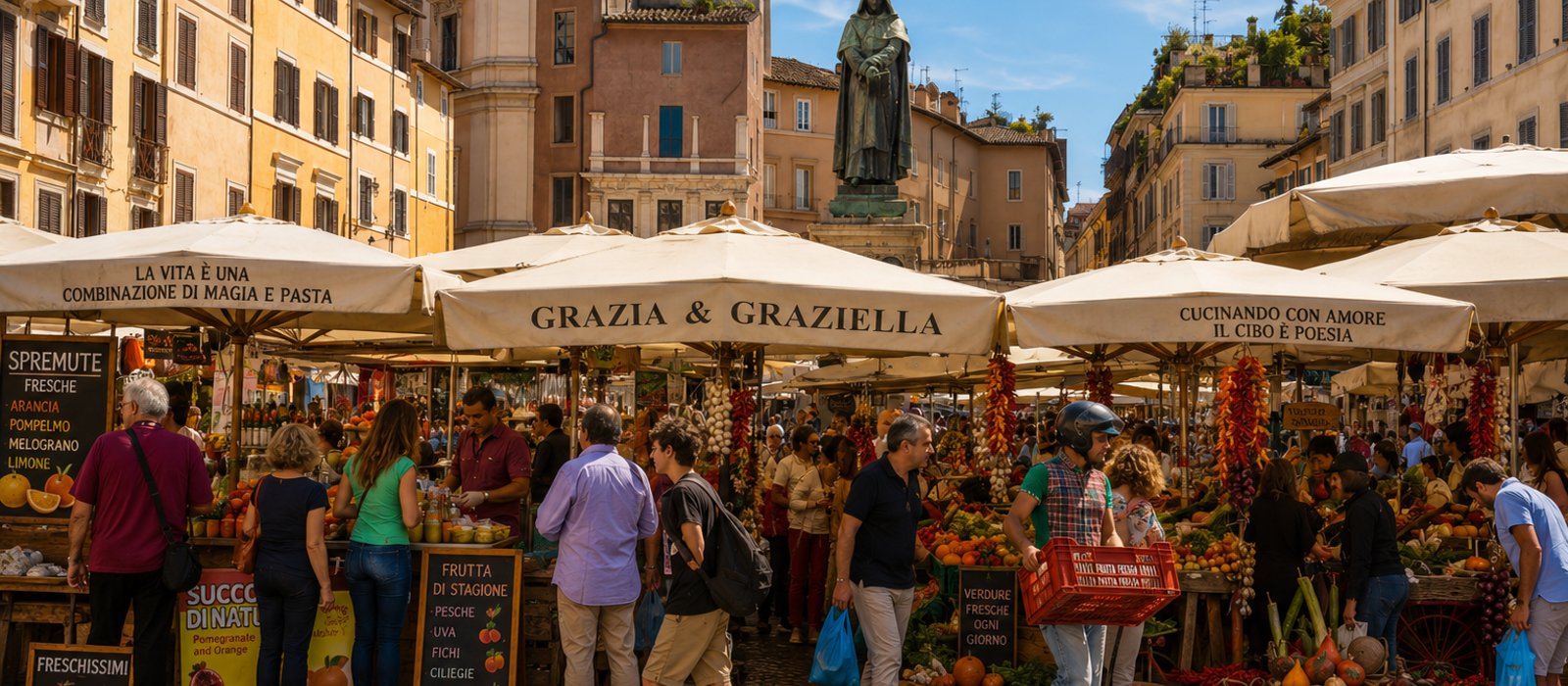
The most picturesque and central market, set in the famous square under the gaze of the Giordano Bruno statue, ringed by Renaissance buildings. Operating as a morning market since the 19th century (1869), mainly Monday–Saturday (check current hours — some stalls now appear other days too). It's gone fairly touristy — expect souvenir stalls alongside the produce, flowers, and spices — but it's atmospheric, photogenic, and a great starting point right in the centro (see our Campo de' Fiori guide).
Mercato Trionfale
One of Rome's biggest food markets, near the Vatican, where chefs and locals actually shop. Hundreds of stalls of fresh fish, artisan cheeses, meats, produce, and regional specialties — a paradise for serious food lovers and refreshingly un-touristy. Great to visit early before the Vatican Museums. Mornings, Monday–Saturday (closed Sundays; check current hours).
Nuovo Mercato Esquilino
The most international and multi-ethnic market, near Piazza Vittorio by Termini. A covered melting pot where Rome's immigrant communities shop — South Asian spices, African vegetables, Middle Eastern ingredients alongside Italian produce, often at the city's lowest prices. The place for hard-to-find global ingredients and a vibrant cultural mix.
Mercato Centrale (Termini)
Not a traditional market but a gourmet food hall inside Termini station — artisan vendors, street food, and quality bites in one convenient spot. Ideal for a good meal before or after a train, far better than the station's fast food.
The flea & vintage markets
Porta Portese
Rome's biggest flea market, a vast Sunday-morning sprawl in Trastevere — vintage clothing, antiques, bric-a-brac, books, and bargains of every kind. Go early (it gets packed by noon), haggle, and guard your belongings (crowded flea markets are pickpocket territory). A real slice of Roman Sunday life.
Mercato Monti
A hip weekend vintage and design market in the cool Monti neighborhood — independent designers, vintage clothing, handmade jewelry, and one-of-a-kind gifts. Smaller and curated, great for unique souvenirs (see our Monti guide).
What to buy (and bring home)
Markets are perfect for both eating now and stocking up on edible souvenirs that beat anything in a gift shop. To eat on the spot: street food at Testaccio and Mercato Centrale (trapizzino, supplì, pizza al taglio), fresh fruit, and a wedge of cheese with bread for an impromptu picnic. To bring home (food makes the best, most affordable Roman souvenir): vacuum-packed or hard cheeses like pecorino romano (check your home country's customs rules on dairy), cured meats where permitted, dried pasta in interesting shapes, olive oil and balsamic, dried porcini, spices and dried herbs, coffee beans from a good roaster, jars of artichokes, truffle products, and limoncello or amaro. The international Esquilino market is also the spot for global ingredients you might not find at home. A few practical notes: check what your country allows you to import (meat and fresh dairy are often restricted; sealed, shelf-stable items are usually fine), buy perishables at the end of your trip, and ask vendors to vacuum-pack cheeses for travel. A bag of market food is a far better memento than a mass-produced trinket — and a delicious way to relive the trip at home.
How to enjoy Rome's markets
- Go in the morning — food markets are a morning-into-early-afternoon thing and wind down after lunch; flea markets like Porta Portese are Sunday mornings.
- Bring cash — many stalls are cash-only or prefer it; small bills help.
- Bring a tote — for produce, picnic supplies, or foodie souvenirs.
- Graze for lunch — Testaccio and Mercato Centrale are perfect for a cheap, delicious market meal.
- Guard your bag in the crowded ones (especially Porta Portese and Campo de' Fiori) — pickpocket awareness (see our scams guide).
- Check the day/hours — most food markets close Sundays (Porta Portese is the Sunday exception); confirm current hours, which vary by market and day.
- Combine with the neighborhood — pair Testaccio market with the neighborhood's trattorias, Trionfale with a Vatican morning, Campo de' Fiori with a centro walk.
- Take a market food tour if you want the most out of it — a guide gets you past the language barrier, introduces you to the best vendors, and explains what you're tasting (especially rewarding at Testaccio).
- Watch, then buy — spend a few minutes observing how locals shop and order before diving in; it tells you which stalls are the good ones (the busy ones with nonnas queuing) and how the rhythm works.
- Engage the vendors — a buongiorno and a little curiosity go a long way; many will offer a taste, and the human exchange is half the pleasure of a Roman market.
The bottom line
Rome's markets are a delicious, free window into the city's food life, each with its own strength: Testaccio for the best street-food lunch, Campo de' Fiori for the picturesque central scene, Trionfale for the un-touristy chef's market near the Vatican, Nuovo Mercato Esquilino for global ingredients, and Mercato Centrale for a gourmet bite at Termini — plus Porta Portese (Sunday flea) and Mercato Monti (weekend vintage) for treasure-hunting. Go in the morning, bring cash and a tote, graze for lunch, mind your bag in the crowds, and you'll taste the real Rome a few euros at a time.
Keep planning
Not sure how it all fits together?
Pick your trip length and we'll route a real day-by-day plan.
Build your trip →