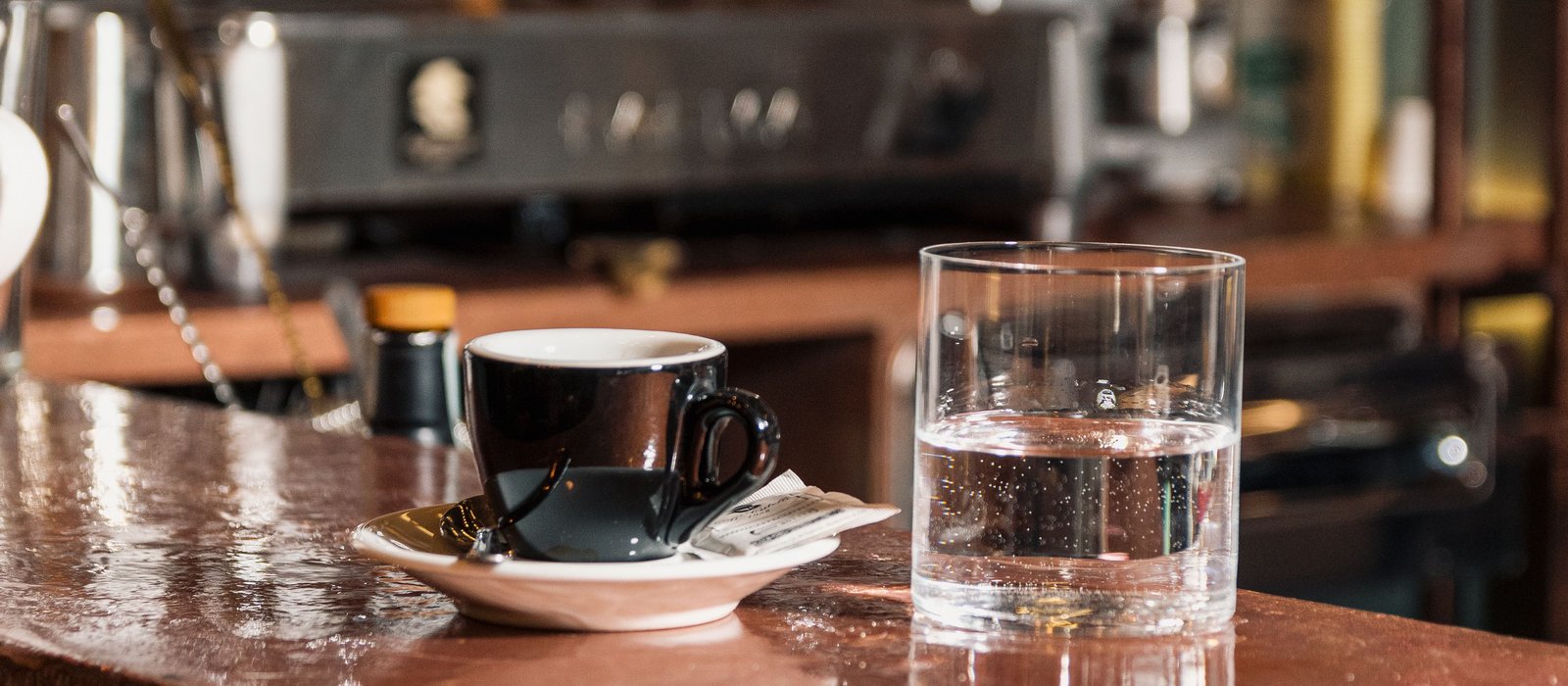
Coffee in Rome is nothing like coffee in America — not the drinks, not the ritual, not the etiquette, not even the price. There are no venti oat-milk lattes sipped from a paper cup on a park bench here; there's a small, strong espresso knocked back standing at a marble bar in thirty seconds, for about a euro. Understanding how Roman coffee works is one of the quickest ways to feel less like a tourist and enjoy one of the city's great everyday pleasures. This guide decodes the drinks, the rules, and the ritual.
The ritual: standing at the bar
The single biggest difference: in Rome, coffee is usually taken standing at the bar (al banco), quickly. You walk into a bar (which in Italy means a café), and the rhythm is:
- Pay first at the register (cassa) — tell the cashier what you want, pay, take the receipt (scontrino). (In some places you order and pay the barista directly — watch what locals do.)
- Take your receipt to the bar and tell the barista your order.
- Drink it standing at the counter, often in a few minutes, maybe with a quick chat.
- Leave — no lingering required.
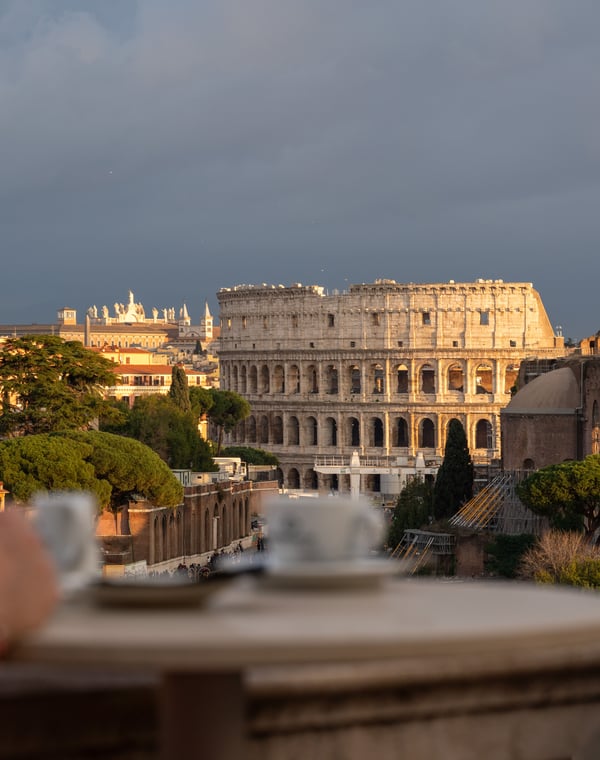
This is everyday coffee: fast, cheap, social in a brisk way. Sitting at a table costs more (sometimes much more) — table service carries a premium, fine if you want to linger in a piazza, but know you're paying for the seat, not just the coffee.
The drinks, decoded
Order like a local by knowing what the words actually mean:
- Caffè — this means espresso. If you ask for "a coffee," you get a small, strong espresso. This is the default Roman coffee.
- Cappuccino — espresso with steamed, foamed milk. A breakfast drink only (see the rules below).
- Caffè latte — espresso with lots of milk (ask for "caffè latte," because just "latte" means a glass of milk).
- Macchiato — espresso "stained" with a little milk foam (between an espresso and a cappuccino).
- Caffè lungo — a "long" espresso, pulled with more water (still small; not an American coffee).
- Caffè americano — espresso diluted with hot water, the closest to American drip (but still not the same).
- Ristretto — a "restricted," extra-concentrated espresso.
- Caffè corretto — espresso "corrected" with a splash of liquor (grappa, sambuca) — a Roman pick-me-up.
- Caffè freddo / shakerato — cold/iced coffee in summer (the shakerato is shaken with ice, sometimes sugar).
- Marocchino — a small espresso with cocoa and milk foam, a little treat.
There's no drip-coffee-in-a-bucket here; everything is espresso-based and small.
The rules (or you'll out yourself as a tourist)
A few unwritten conventions Italians live by:
- No cappuccino after a meal. Milky coffees (cappuccino, caffè latte, marocchino) are morning drinks — breakfast or mid-morning. Ordering a cappuccino after lunch or dinner quietly marks you as a tourist (no one refuses you; it's just not done). After a meal, Italians have an espresso.
- Coffee is an espresso unless you say otherwise — don't expect a big cup.
- It's quick and standing — the to-go paper cup wandering the streets isn't really a thing (though some tourist spots offer it).
- Sugar is normal, stirred into the small cup; pastries (cornetto — the Italian croissant) accompany morning coffee.
- It's cheap at the bar — an espresso standing is one of the best-value pleasures in Rome (keep prices in mind: table service costs more).