Rome has spectacular food — and also, especially around the big sights, plenty of mediocre, overpriced restaurants engineered to catch tourists who don't know better. The good news: tourist traps follow predictable patterns, and once you know the red flags (and the green ones), you can walk past the bad ones and find a great meal almost anywhere in the city. This guide gives you a quick, reliable filter so you eat like a Roman, not like a mark.
The red flags (walk away)
A restaurant showing several of these is very likely a tourist trap:
- A host outside actively waving you in. Good Roman restaurants don't need to hustle for customers; a person beckoning tourists from the doorway (especially near major sights) is a strong warning sign.
- Photos of the food on the menu — big laminated menus with glossy pictures of every dish scream "tourist." Authentic places trust you to know, or to ask.
- Menus in five languages prominently displayed, with flags. (A little English is fine and normal; a multi-flag photo-menu is the tell.)
- "Tourist menu" / "menu turistico" — a fixed cheap multi-course deal aimed squarely at visitors, usually low quality.
- Right on a major sight or famous piazza. Prime real estate facing the Trevi, Pantheon, Navona, or the Colosseum pays for itself with location, not cooking. The closer to a top sight, the higher the trap risk.
- A vast menu trying to do everything — pizza and pasta and seafood and steak and "international" dishes. Good kitchens specialize; an encyclopedic menu means a freezer and a microwave.
- Pictures of past celebrity diners, or "as seen on TripAdvisor" stickers plastered everywhere.
- Empty at peak Roman dining time (after 8:30 p.m.) — if locals aren't there when locals eat, that's telling.
- Pushy upselling — bread/cover charges sprung as surprises, "specials" with no prices, aggressive add-ons (see our scams guide for the bill tricks to watch).
The green flags (good signs)
Conversely, look for these encouraging signs:
- A short, seasonal menu — often handwritten or changing, focused on a few things done well, ideally Roman classics.
- Mostly Italian on the menu, with maybe modest English — and Roman specialties (cacio e pepe, carbonara, amatriciana, gricia, saltimbocca, artichokes) front and center.
- Locals eating there, especially at proper Roman hours (lunch ~1–2 p.m., dinner from 8 p.m.).
- A bit off the main drag — quality and value jump even one or two streets away from the famous sights.
- No one hustling you in — a calm, confident door.
- A coperto clearly stated (the normal cover charge) rather than surprise fees.
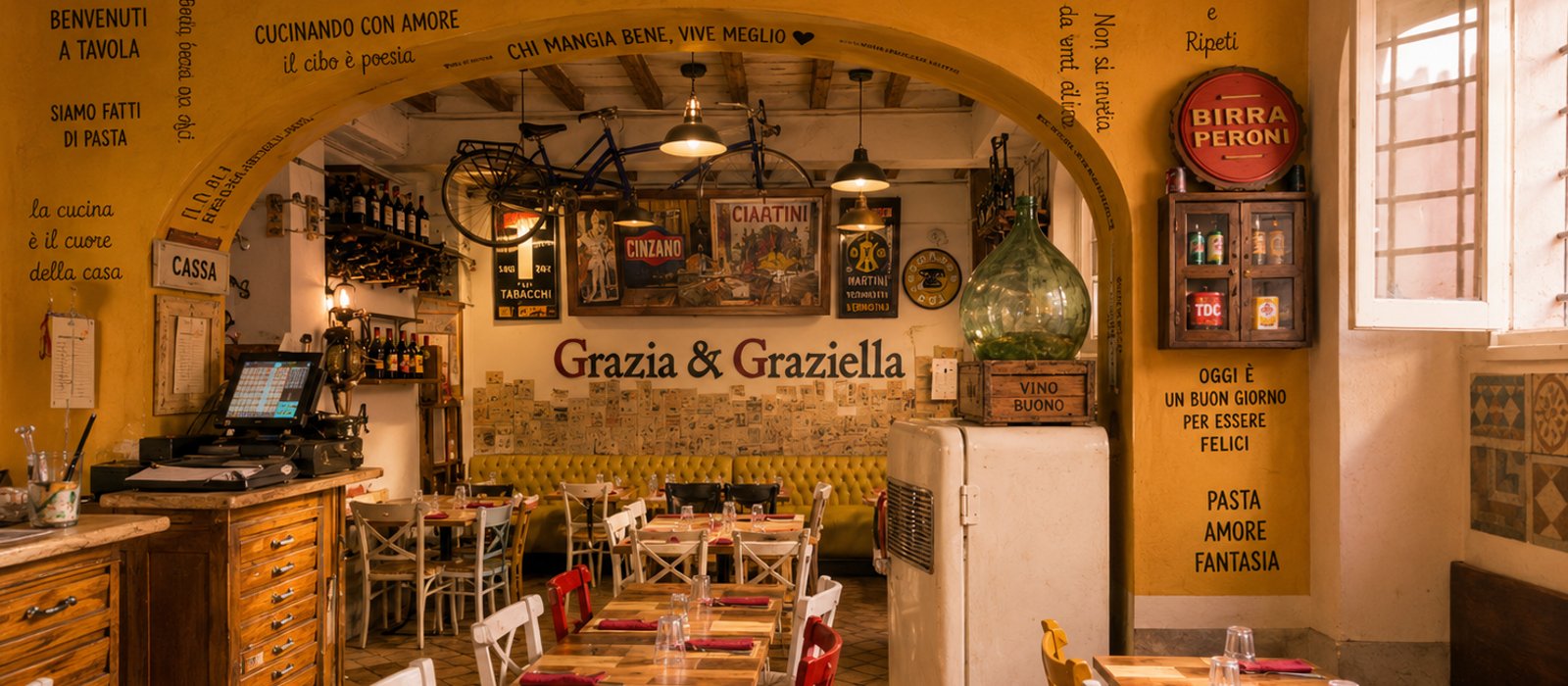
- Simple, unfussy decor focused on the food, not the photo op.
The simple rule: walk two streets
If you remember one thing: walk a couple of streets away from the major sight before you eat. The restaurants directly on or facing the Trevi, the Pantheon, Piazza Navona, the Spanish Steps, or the Colosseum are almost universally the worst value in the city — you pay premium prices for tourist-grade food and the view. Two or three streets into the side lanes, prices drop and quality climbs dramatically. This single habit defeats most tourist traps.
The bill traps to watch
Beyond spotting a trap before you sit down, a few bill-time tricks are worth knowing so you're not caught out at a borderline place:
- "Specials" with no listed price. If a waiter recites daily specials (especially fish or steak) without mentioning cost, ask the price before ordering — surprise specials priced by weight are a classic way to inflate a bill.
- Fish "by the etto." Whole fish is often priced per 100 grams (etto), so a "reasonable" number is multiplied several times for the actual fish — clarify the total before agreeing.
- Surprise cover/service charges. A coperto (per-person cover) is normal and should be stated on the menu; be wary of vague extra "service" charges added on top, or a coperto far higher than the typical small amount.
- Unrequested extras. Bread, bottled water, or a "complimentary" limoncello that then appears on the bill — you can decline bread/water and ask for tap water (acqua del rubinetto) — it's legally free on request, though not common practice in Roman restaurants, so some places may still steer you toward bottled.
- Check the itemized bill. Glance over it for items you didn't order or quantities that are off — politely query anything that looks wrong; honest places correct mistakes without fuss.
None of this means Rome is out to fleece you — the vast majority of places are fair — but these tricks cluster precisely at the tourist-trap spots near the big sights, which is one more reason to eat where the red flags are absent. (See our scams guide for more.)
How to actually find good places
- Eat in the right neighborhoods — Testaccio (the home of Roman cuisine), Trastevere's back lanes, Monti, the Jewish Ghetto, Prati — all deliver far better than the tourist core (see our neighborhood and dining guides).
- Look where locals eat at local hours.
- Reserve good trattorias — the best small places fill up and take bookings (see our trattorias guide).
- Use reviews critically — cross-check, and weight recent, detailed local reviews over volume; a place can game ratings.
- Ask a Roman — your hotel, a shopkeeper, a bartender; locals love steering you to the real thing.
- Trust the classics done simply — a place doing a tight menu of Roman staples well beats one doing everything.
The bottom line
Tourist traps in Rome announce themselves: a host waving you in, photo menus in five languages, a "tourist menu," a prime spot facing a famous sight, and an everything-menu are the red flags to walk past. Seek the green flags instead — a short seasonal menu of Roman classics, locals eating at local hours, a calm door, and a location a couple of streets off the main drag. Remember the one golden rule — walk two streets away from the big sights before you eat — and head for the real food neighborhoods, and you'll eat brilliantly in a city that rewards anyone who knows where to look.
Keep planning
Not sure how it all fits together?
Pick your trip length and we'll route a real day-by-day plan.
Build your trip →