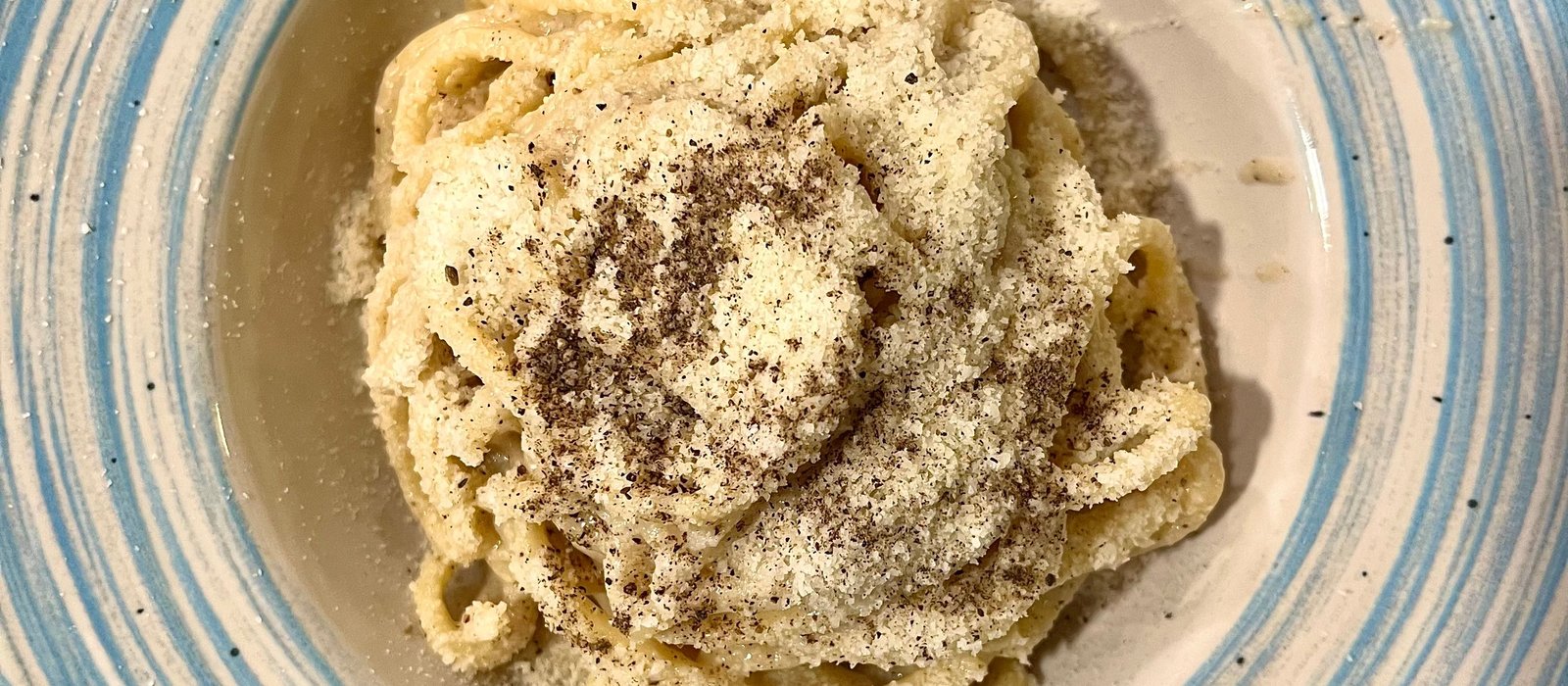
Rome's four classic pastas are the heart of its cuisine — and tracking down great versions is one of the genuine joys of a visit. But it's also where tourists most often get a mediocre, overpriced plate, because the dishes are simple, which means a lazy kitchen has nowhere to hide and a tourist-trap one can fake it. This guide is about eating the classics well: what each dish should taste like, how to tell a serious kitchen from a phoned-in one, and which neighborhoods reliably deliver the real thing. (For the dishes themselves in depth, see our Roman dishes guide; this one is about where and how to eat them.)
The four classics, and what "right" tastes like
All four share a Roman DNA — pecorino romano (sharp sheep's cheese), guanciale (cured pork cheek, not bacon or pancetta), black pepper — and knowing what each should be is your best defense against a bad version:
- Cacio e pepe — just pecorino and pepper emulsified with pasta water into a silky, glossy sauce. No cream, no butter. It should cling, not clump. This is the test dish: order it first anywhere new.
- Carbonara — guanciale, egg, pecorino, black pepper. The creaminess comes from egg and cheese, never cream. A menu listing panna (cream) in the carbonara is an instant red flag.
- Amatriciana — the guanciale-and-pecorino base plus a bright, slow-cooked tomato sauce (often a touch of chili), traditionally on bucatini. Tangy, savory, hearty.
- Gricia — the "white amatriciana," essentially carbonara without the egg: guanciale, pecorino, pepper. Simple and pork-forward.
If a kitchen nails cacio e pepe and serves a carbonara with no cream, it almost certainly does the rest well.
How to tell a serious kitchen from a tourist trap
The classics are simple, so the signals are clear:
- No cream in the carbonara, ever — on the plate or the menu description. This single tell filters out most tourist traps.
- A short, often-handwritten menu focused on Roman dishes, not a vast laminated multi-language one with photos.
- Bucatini or the traditional pasta shapes and a coperto on the bill (normal, not a scam).
- A room with Italians in it at the late local dinner hour, and no host outside waving you in.
- Reasonable prices for a pasta — a wildly cheap "tourist menu" carbonara near a monument is exactly what it looks like.
Walk a couple of blocks off the busiest tourist squares (around the Vatican, Trevi, Navona) and the quality jumps while the price drops.
Where to eat them: the neighborhoods
You don't need a single famous address — you need the right area and the signals above. The most reliable neighborhoods for the classics:
Testaccio — the spiritual home
Rome's old slaughterhouse district is the heartland of traditional cooking and the four pastas, with a deep bench of beloved old-school trattorias. If you want the most serious, no-nonsense versions, eat here. It's also the home of the cucina povera and offal tradition the cuisine grew from.
Trastevere — atmosphere plus substance
The cobbled quarter across the river is touristy on its main squares but hides excellent kitchens on the side streets. Walk away from Piazza di Santa Maria and you'll find trattorias Romans still use, with the classics done right and a lovely evening setting.
The Jewish Ghetto — classics plus specialties
Around Via del Portico d'Ottavia, the Ghetto does the Roman classics alongside its own distinctive Roman-Jewish dishes (the famous fried artichokes), making it a great combined stop.
Monti and the residential quarters
Central Monti has casual trattorias steps from the Forum, and the residential neighborhoods where actual Romans live — San Lorenzo, Pigneto, Testaccio's backstreets — reliably serve honest classics at honest prices, away from any tourist premium.