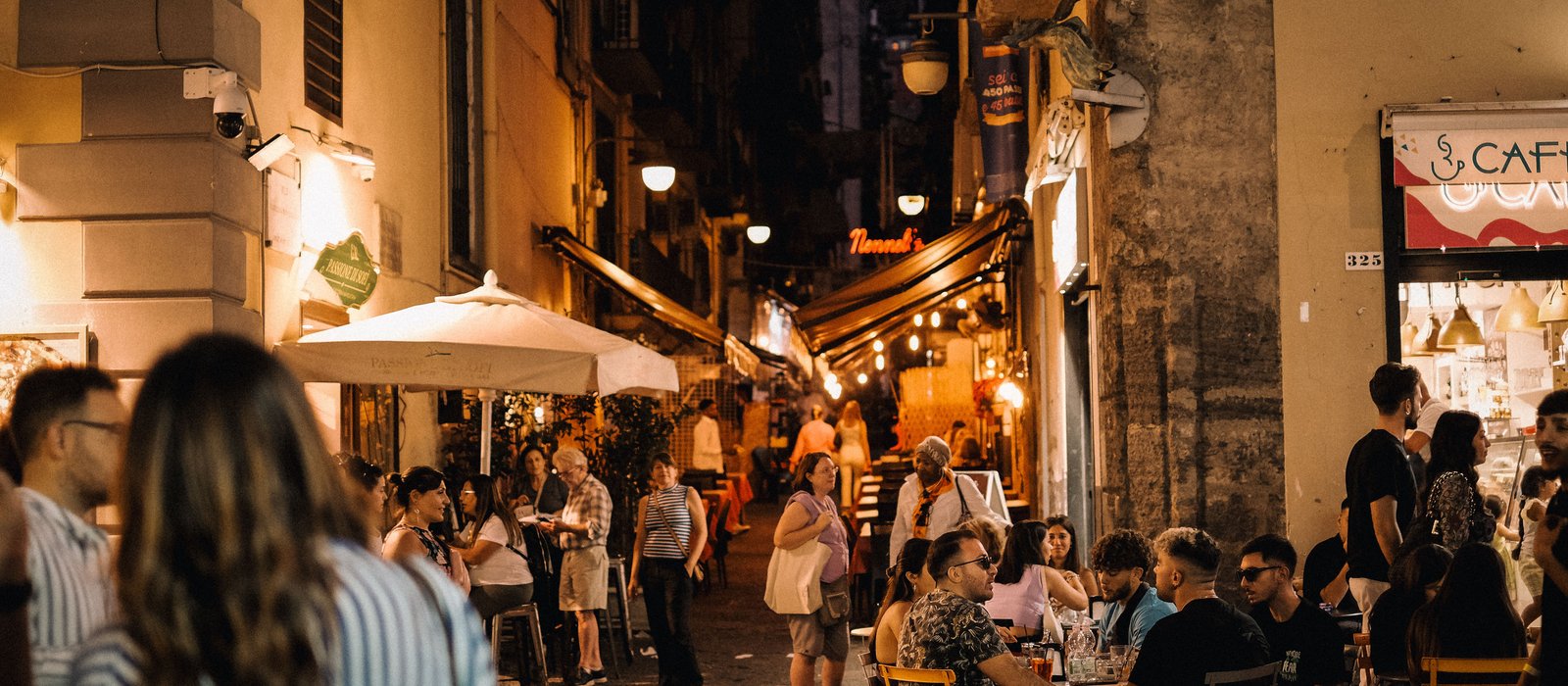
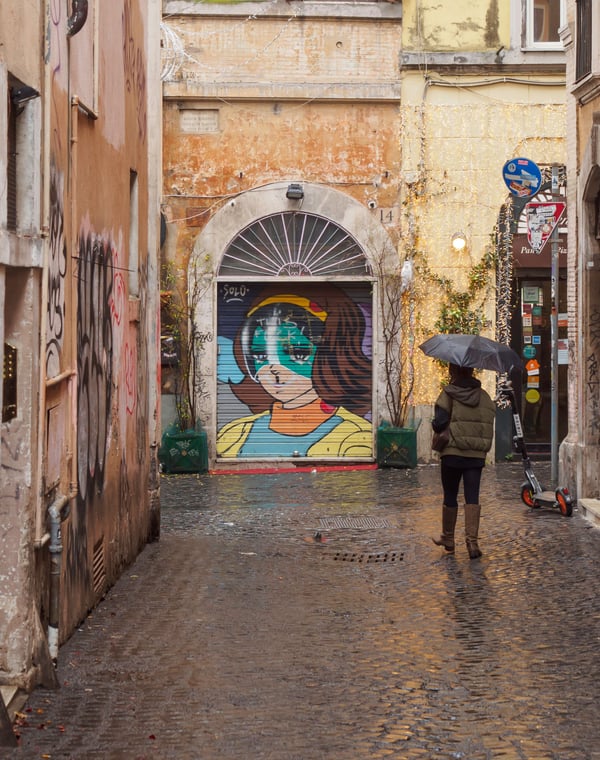
If there's one thing every first-timer should do an evening in Rome, it's cross the Tiber to Trastevere as the sun goes down. By day it's a pretty, cobbled neighborhood; after dark it becomes the Rome people fall in love with — lantern-lit lanes, ivy spilling over ochre walls, the clink of glasses from trattoria terraces, and a slow tide of people drifting from aperitivo to dinner to gelato. This is your guide to a perfect Trastevere evening: how to time it, where to eat well (and avoid the traps), and how to wander it like you belong.
Why Trastevere comes alive at night
"Trastevere" means "across the Tiber," and the neighborhood has always had a slightly separate, bohemian character — a working-class quarter turned beloved evening playground without losing its tangle of medieval streets. The magic is specifically nocturnal: the daytime tour groups thin out, the lamps come on, restaurant tables spill into the lanes, and the whole quarter settles into the long, unhurried Roman evening. It's romantic, lively, and quintessentially Roman all at once.
Timing your evening (the Roman rhythm)
Trastevere rewards going late by American standards:
- Aperitivo (roughly 6:30–8:00 p.m.): start with a spritz, a glass of wine, or a Negroni and a few snacks. It's the ritual that eases Romans toward dinner, and a lovely way to watch the neighborhood wake up.
- Dinner (from 8:00 p.m., often later): Roman kitchens don't get going until 7:30–8:00, and Trastevere dines late — a 9 p.m. table is completely normal. Showing up at 6:30 expecting a buzzing dinner scene means you'll find it half-asleep.
- The passeggiata and gelato (after dinner): the post-dinner stroll with a gelato in hand is the perfect close. The lanes are at their most atmospheric late.
Lean into the late schedule rather than fighting it — it's half the experience.
Where to eat: the lay of the land
Trastevere is famous for traditional Roman cooking — this is a prime neighborhood for the four classic pastas (cacio e pepe, carbonara, amatriciana, gricia) at a proper trattoria. But it's also touristy, so a little navigation pays off:
- Walk away from the busiest squares. The tables packed around Piazza di Santa Maria in Trastevere are the most touristy and trap-prone. Head into the quieter side streets — toward the Viale di Trastevere side or the lanes south and west — and you'll find kitchens locals still use.
- Apply the trattoria test: a short, seasonal, often-handwritten menu; the Roman classics done plainly (no cream in the carbonara); a coperto on the bill; a room with Italians in it; and no host outside waving a photo menu at passersby.
- Book ahead for the well-regarded places on weekend evenings — Trastevere fills up.
A natural evening route
You don't need a rigid plan — Trastevere is made for drifting — but here's a shape that works:
- Cross over around dusk, on foot from the Centro Storico (a pretty walk over one of the Tiber bridges) or a short tram ride.
- Aperitivo at a small bar or a terrace as the light goes golden.
- Wander the lanes between Santa Maria and the quieter southern streets — no destination, just the atmosphere.
- Dinner at a trattoria you've scoped out off the main square, around 8:30–9.
- Gelato and a slow loop back, perhaps up toward the river for the views, or onward for a nightcap.
For a panoramic finish, the Gianicolo (Janiculum) Hill rises just above Trastevere and offers one of Rome's great viewpoints over the city's rooftops and domes — a lovely detour if you have the legs for the climb.
What to eat and drink while you're there
To make the food side concrete, here's what a great Trastevere evening tastes like. Start the meal with a Roman antipasto — supplì (fried rice balls with a molten mozzarella center), or in spring, carciofi (artichokes). Move to a primo, which is the heart of it: order cacio e pepe to test the kitchen, then branch into carbonara, amatriciana, or gricia to taste the range of Rome's four classic pastas. If you're still going, a secondo like saltimbocca or a simple grilled fish, plus a contorno (vegetable side). Wash it down with the house wine by the carafe — a good trattoria's is inexpensive and perfectly drinkable, no fancy bottle required. For the aperitivo beforehand, the local moves are an Aperol or Campari spritz, a glass of regional wine, or a Negroni; with them come a few nibbles. And always leave room for the post-dinner gelato — use the display-case test (natural muted colors, covered metal tubs) even here in atmospheric Trastevere, where a flashy tourist gelateria can hide among the good ones.
A few practical notes
- Wear shoes for cobblestones — the sampietrini are uneven and worse in the dark.
- Mind your belongings in the busy bar-and-restaurant crush; it's lively, not dangerous, but petty theft likes a crowd, and the "fake petition" hustle turns up around here.
- It gets loud on weekends. That's the charm if you're out in it — and the downside if you're sleeping in Trastevere (ask for a courtyard-facing room).
- Cards are widely accepted, but carry a little cash for the coperto and smaller places. Tipping is light — round up or leave a euro or two.
- Getting back: it's a walkable or short-tram hop to the center; late at night, a taxi or a FreeNow/itTaxi booking is easy if your feet are done.
Beyond dinner
Trastevere isn't only about eating. It has a deep bench of wine bars and cocktail spots, the occasional live-music corner, and simply the pleasure of the streets themselves. It's also home to the lovely Basilica of Santa Maria in Trastevere, one of Rome's oldest churches, glowing with golden mosaics — worth a look if it's open as you pass. The neighborhood rewards both the planner and the wanderer.
The bottom line
A Trastevere evening is one of Rome's essential pleasures: cross the river at dusk, start with an aperitivo, wander the lantern-lit lanes, eat the Roman classics at a trattoria off the main square, and finish with a gelato on a slow loop home — maybe up to the Gianicolo for the view. Go late, like the Romans do, keep your wits in the crowds, and let the neighborhood set the pace. It's the night you'll remember when you think back on Rome.
Keep planning
Not sure how it all fits together?
Pick your trip length and we'll route a real day-by-day plan.
Build your trip →