Affiliate disclosure: this guide contains affiliate links. If you book through them we may earn a commission, at no extra cost to you.
Sooner or later, a trip to Italy meets a sciopero — a transport strike. It sounds alarming, and the first time you see a departures board turn red at Roma Termini it feels like the trip is falling apart. It isn't. Italian transport strikes are regulated, announced in advance and partial by law, so a strike day is a puzzle with a known shape rather than a shutdown. This guide explains how a sciopero works, what keeps running, where the guaranteed hours are published, and exactly what to do on the day.
How an Italian transport strike works
An Italian transport strike, or sciopero, is a legally regulated stoppage: Italian law treats trains, buses and the metro as essential public services, so unions must announce a strike in advance, state its start and end time, and guarantee a minimum service while it runs. A sciopero is therefore never a surprise and never total — some trains and some hours are protected, and those are published before the day.
Three details matter to a visitor:
- Strikes are scoped. A notice names who is striking — national rail staff, one train company, Rome's city transport company ATAC, airport ground staff, air-traffic control — and where. A national rail strike can leave the Rome metro untouched, and an ATAC strike can leave every train to Florence running.
- Strikes have a start and end time, not a calendar day. A rail strike often runs from one evening to the next, so a train the night before can be caught in it. Read the hours in the notice, not just the date.
- Strikes get called off. A strike on the calendar can be cancelled, shortened or postponed in the last days before it. Check again the evening before.
Where to check for strikes before and during your trip
The Italian Ministry of Infrastructure and Transport publishes the official strike calendar for the whole country, listing every announced transport sciopero by sector, region, date and duration. The Ministry calendar is the place to check first, ideally when you book trains and again the day before travel, because it covers rail, local transport, airports and ferries in one list.
The calendar tells you a strike exists; the operators tell you what it means for your journey. Once you see a strike that overlaps your dates:
- Trenitalia posts a strike notice on its site and app with the list of guaranteed trains.
- Italo, the private high-speed operator, posts its own notice. Italo staff are not always part of a national rail strike, so check both companies separately.
- ATAC, which runs Rome's metro, buses and trams, posts the guaranteed time bands for the city network on its site.
- Your airline will notify you if an aviation strike touches your flight; airport and air-traffic strikes appear on the same Ministry calendar.
Guaranteed trains and guaranteed hours on Trenitalia
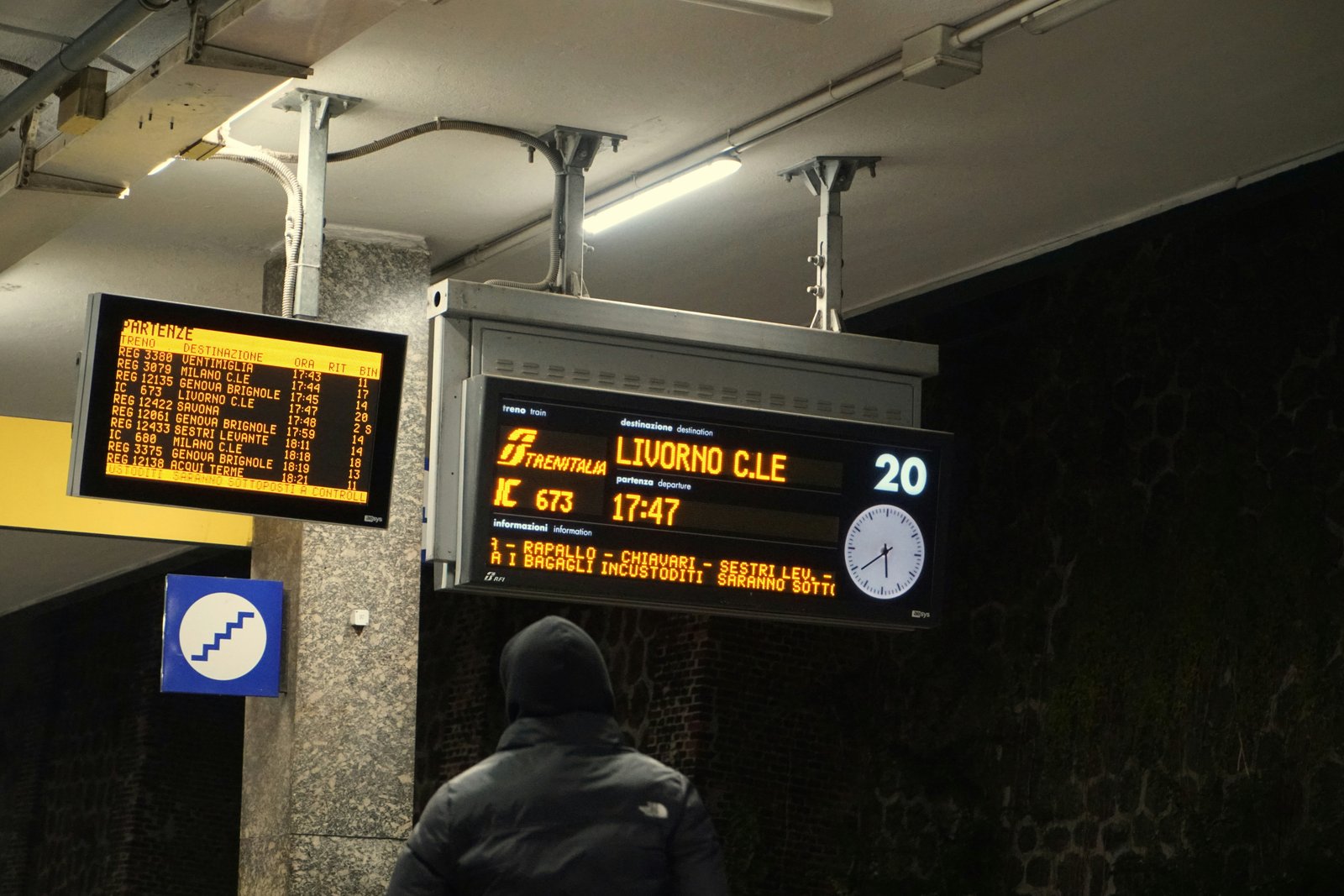
Trenitalia protects two things during a national rail sciopero: a published list of guaranteed long-distance trains (treni garantiti) that run whatever happens, and regional trains inside fixed morning and evening commuter bands, set so people can still get to and from work. Trenitalia prints both — the train list and the exact band times — in the strike notice for that specific sciopero.
How to read it for your own journey:
- Find your train number on your ticket and look for it on the guaranteed list. If it is there, it runs. Go to the station as normal.
- If it is not on the list, treat it as cancelled even if the app still shows it. Some unlisted trains do run, but you only learn which ones on the day, on the board.
- Regional trains — the slower trains to Orvieto, Tivoli or the coast — run normally inside the commuter bands and patchily outside them. A day trip is still possible if you leave early inside the morning band and come back inside the evening one.
Rome's metro, buses and trams on an ATAC strike day
ATAC, the company that runs Rome's metro lines, buses and trams, guarantees full service only inside protected time bands published with each strike notice, usually one in the early morning and one in the late afternoon. Outside the ATAC bands, metro stations can close and bus routes thin out or stop. Tickets work as normal: a €1.50 BIT still lasts 100 minutes on whatever runs.
On a city strike day, the centre of Rome is more walkable than it looks on a map — the Pantheon, Piazza Navona, the Trevi Fountain and Campo de' Fiori sit within a short walk of each other. Plan the day as a walking day in one area rather than a cross-town one, and use the guaranteed bands for the one long hop you cannot walk. Contactless tap-in works on the gates and buses that are running, so there is no need to buy paper tickets in advance; the ticket and Roma Pass guide explains how tapping caps your spend. One thing does not change on a strike day: inspectors still check tickets, and the €100+ fine for an unvalidated paper ticket still applies.