Taxis in Rome have a reputation — some of it deserved, most of it avoidable. The honest truth: the vast majority of Roman taxi drivers are fine, the fares are regulated, and a few simple habits protect you from the handful who'd overcharge a tourist. This guide covers how to recognize an official taxi, how fares actually work (including the fixed airport rates), which apps to use, and the specific moves that keep you from being overcharged.
How to recognize an official taxi
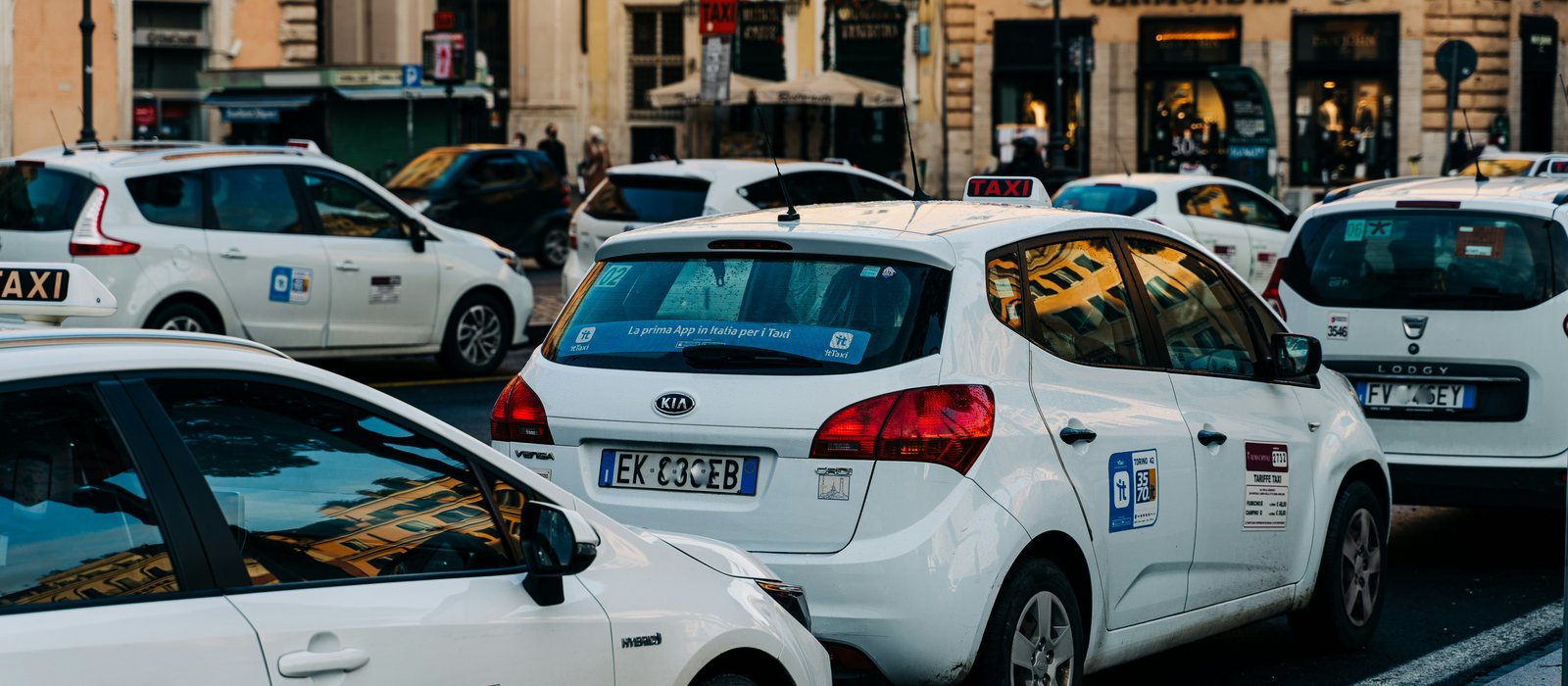
This is rule one, because most "taxi scams" start with an unofficial car. Official Rome taxis are: - White, with a lit "TAXI" sign on the roof. - Marked with the city crest and a license number on the door (and usually on the receipt). - Found at designated taxi ranks (outside Termini, the airports, and major piazzas) or booked by app/phone — not by accepting an offer from someone approaching you inside a terminal or station.
If a driver approaches you offering a ride — especially at the airport or Termini — walk past them to the official rank. That unsolicited offer is the classic setup for an unmetered overcharge.
How fares work
Rome taxis run two ways:
Fixed airport fares
Fares between the airports and the city center are fixed by law, regardless of traffic or time: €55 from Fiumicino (FCO) and €40 from Ciampino (CIA) to anywhere inside the Aurelian Walls (essentially all of central Rome), covering up to four passengers with luggage. At the airport rank you'll see a posted board listing these fixed fares ("Tariffe Fisse"). Confirm the fixed fare with the driver before you load your bags. (These official rates can be adjusted over time, so glance at the posted board.)
Metered fares (everywhere else)
In-city rides run on the meter: a starting amount when you get in, then increasing by distance and time. Night, Sunday, and holiday rates are higher, and there can be small fixed surcharges for luggage — these are set by the city, not invented by the driver, and should be posted on a rate card inside the cab. The meter is your friend: insist on it for any non-fixed-fare trip.
The apps (the easiest way to avoid trouble)
Booking through an app removes most overcharge risk because the route and payment are tracked. The main options in Rome: - FreeNow and itTaxi — the two most widely used; both connect you to licensed white taxis, show the driver and plate, and handle payment. - Uber — operates in Rome but typically connects you to licensed taxis/black cars rather than the cheaper UberX you may know from the US; expect taxi-level pricing. - appTaxi / inTaxi — additional licensed-taxi apps.
Apps also solve the language barrier and the "is the meter honest?" worry in one move. For many visitors, defaulting to FreeNow or itTaxi is the simplest approach.
Paying: cards work, but confirm
Italian law requires taxis to accept cards, and most carry a reader — but machines are sometimes "broken" (genuinely or conveniently). Two protections: say "carta?" (card?) when you get in to confirm, and carry a little cash as backup for small trips or a dead reader. App bookings sidestep this entirely with in-app payment.